
2025-07
Ban the Paraquat Pesticide
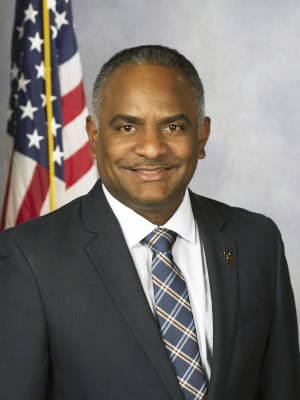
Sponsored by
Rep. Danilo Burgos (PA)
Reported to the Caucus by the
NHCSL Energy, Infrastructure and Evironment Task Force
Rep. Eva-Dina Delgado (IL), Chair
Unanimously ratified by the Caucus on November 22, 2025
WHEREAS, "paraquat" is a non-selective herbicide chemical with CAS number 4685-14-7 and any salt of that chemical, including methyl viologen (CAS number 1910-42-5) and paraquat bismethylsulfate (CAS number 2074-50-2) that kills all plants by inhibiting photosynthesis; and,
WHEREAS, paraquat can “cause serious health effects, including death if ingested, inhaled or absorbed through the skin… poisoning is often fatal, and also causes… hepato-renal failure, progressive fibrosis of the lung” and Parkinson’s disease. There is no antidote;[1] and,
WHEREAS, research concludes that, “even when it’s used within the recommended safety range… the risks it poses to humans and the environment outweigh the agricultural benefits;”[2] and,
WHEREAS, farmers and farmworkers have been killed by merely having a pesticide containing paraquat accidentally sprayed into their mouths;[3] and,
WHEREAS, paraquat is banned in 70 countries including all the members of the European Union, Canada, India, Thailand, Brazil, Chile, Malaysia, Peru and Taiwan;[4] and,
WHEREAS, even China banned the domestic use of paraquat, “despite a state-owned Chinese chemical company acquiring Syngenta [the maker of paraquat] in a record $43 billion deal in 2017;”[5] and,
WHEREAS, Australia is considering a ban and will announce its findings later in 2025;[6] and,
WHEREAS, most farmers in the United States do not use paraquat, and research has found that agriculture without paraquat is feasible without loss of productivity;[7] and,
WHEREAS, in 2024, California, a state which historically seen wide paraquat usage, enacted Assembly Bill 1963, which requires its Department of Pesticide Regulation (DPR) to complete a re-evaluation of paraquat dichloride by January 1, 2029, and make the determination to retain, cancel, or suspend its registration, or to place new restrictions on the use; and,
WHEREAS, the EPA was on track to report on paraquat risks earlier this year but reversed the intended action;[8] and,
WHEREAS, in July 2025, less than a month ahead of what would have been the first US trial over allegations that paraquat causes Parkinson’s disease, its maker, Syngenta, settled the case in Pennsylvania state court. Six thousand other Parkinson’s patients have sued Syngenta in US courts. And Syngenta is also pursuing a global settlement. [9]
THEREFORE, BE IT RESOLVED, that the National Hispanic Caucus of State Legislators urges the federal government to ban the use of paraquat and calls on all states to pass legislation to functionally ban its use within their borders.
IN ITS MEETING OF JULY 25, 2025, THE NHCSL ENERGY, INFRASTRUCTURE AND ENVIRONMENT TASK FORCE UNANIMOUSLY RECOMMENDED THIS RESOLUTION TO THE EXECUTIVE COMMITTEE FOR APPROVAL.
THE NHCSL EXECUTIVE COMMITTEE UNANIMOUSLY APPROVED THIS RESOLUTION ON AUGUST 5, 2025, AT ITS MEETING IN BOSTON, MA.
THE NATIONAL HISPANIC CAUCUS OF STATE LEGISLATORS UNANIMOUSLY RATIFIED THIS RESOLUTION AT ITS ANNUAL MEETING OF NOVEMBER 22, 2025 IN OKLAHOMA CITY, OKLAHOMA.
[1] Murthy Malla BSS, Kattamreddy AR. A case for banning paraquat in India: A public health concern. Natl Med J India 2024:37: 270–1. DOI: 10.25259/NMJI_875_2023
[2] Nedeljka Rosic, Joanne Bradbury, Sandra Grace, ‘One sip can kill’: why a highly toxic herbicide should be banned in Australia. (The Conversation, Updated: May 20, 2021).
[3] Nedeljka Rosic, Joanne Bradbury, Sandra Grace, ‘One sip can kill’: why a highly toxic herbicide should be banned in Australia. (The Conversation, Updated: May 20, 2021).
[4] PIRG, This toxic pesticide is banned in 70 countries, but still legal in America. (Dec 19, 2024).
[5] Cho Park and Jared Kofsky, Essential herbicide, but at what cost? Paraquat remains in US despite bans elsewhere (ABC News, Dec 5, 2023).
[6] APVMA, Review timeframes for paraquat and diquat extended (Dec 20, 2024).
[7] Stuart AM, Merfield CN, Horgan FG, Willis S, Watts MA, Ramírez-Muñoz F, U JS, Utyasheva L, Eddleston M, Davis ML, Neumeister L, Sanou MR, Williamson S. Agriculture without paraquat is feasible without loss of productivity-lessons learned from phasing out a highly hazardous herbicide. Environ Sci Pollut Res Int. 2023 Feb;30(7):16984-17008. doi: 10.1007/s11356-022-24951-0. Epub 2023 Jan 9. PMID: 36622585; PMCID: PMC9928820.
[8] Carey Gillam, EPA moves to withdraw decision on paraquat, delays report on risks (The New Lede, Jan. 18, 2025).
[9] Carey Gillam, With trial approaching, Syngenta settles paraquat lawsuit brought by Parkinson’s patient (The New Lede, July 8, 2025).