
2025-17
Stronger Consumer Protections and Hospital Financial Assistance Policies to Address Medical Debt
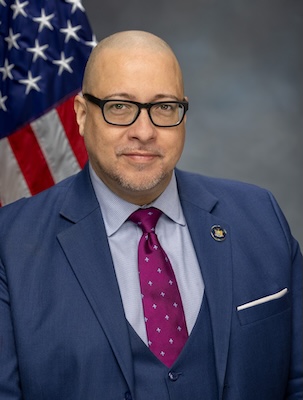

Sponsored by
Sen. Gustavo Rivera (NY) and Rep. Veronica Paiz (MI)
Reported to the Caucus by the
NHCSL Healthcare Task Force
Rep. Alma Hernández (AZ), Chair

Unanimously ratified by the Caucus on November 22, 2025
WHEREAS, the National Hispanic Caucus of State Legislators (NHCSL) recognizes that medical debt is a leading cause of financial hardship[1] and disproportionately affects Hispanic communities and other communities of color;[2] and,
WHEREAS, during 2020–2021, 11.3% of U.S. adults lived in families that experienced difficulty paying medical bills, with Hispanic or Latino adults and non-Hispanic Black or African American adults disproportionately affected compared to non-Hispanic White and non-Hispanic Asian adults;[3] and,
WHEREAS, Native Americans are twice as likely to have medical debt when compared to the national average;[4] and,
WHEREAS, almost half (47%) of cancer patients and survivors incurred medical debt to pay for their cancer care and those with cancer debt are more than three times as likely to be behind on screenings;[5] and,
WHEREAS, the fear of medical debt may be one of the reasons why, since at least 2019, Hispanics have consistently been the major racial or ethnic group most likely to either not get or delay needed medical care due to cost;[6] and,
WHEREAS, aggressive medical debt collection practices,[7] including lawsuits[8], wage garnishments, and credit reporting, exacerbate economic disparities and undermine public health;[9] and,
WHEREAS, nonprofit hospitals—many of which receive tax exemptions—are legally obligated to provide financial assistance or charity care,[10] they often fail to adequately inform patients or implement fair policies;[11] and,
WHEREAS, state legislatures have the authority and strong bipartisan support to protect consumers from medical debt and responsibility to regulate hospital billing practices, require standardized financial assistance policies, and protect consumers from predatory medical debt collection;[12] and,
WHEREAS, health insurance plans sometimes also prevent copay assistance from being applied to a patient's deductible or maximum out-of-pocket expenses by applying so-called copay accumulator adjustment programs to the enrollee’s cost-sharing obligations;[13] and,
WHEREAS, the National Consumer Law Center publishes a Model Medical Debt Protection Act which provides suggested language to improve state health care financial assistance laws, and to strengthen medical debt collection consumer protections.[14]
THEREFORE, BE IT RESOLVED, that the National Hispanic Caucus of State Legislators urges state legislatures to adopt comprehensive medical debt protection laws, that include, but are not limited to standardized hospital financial assistance policies, prohibitions on aggressive collection practices, public reporting of hospital financial assistance and collection practices, state oversight of nonprofit hospital compliance with charity care obligations, and credit reporting protections; and,
BE IT FURTHER RESOLVED, that NHCSL supports state-level reforms requiring hospitals to provide transparency in medical billing, financial support and charity care, as well as to offer income- and family size-based financial assistance programs, payment plan options, and comprehensive education on patient rights; and,
BE IT FURTHER RESOLVED, that the NHCSL believes if a prescribed drug is the only medically appropriate treatment for a condition, the enrollee’s cost-sharing obligations must be adjusted to account for third-party financial assistance, regardless of whether a generic equivalent is available and the prescribing provider may submit documentation of medical necessity, and the health plan should be required to honor the third-party assistance in the absence of a generic alternative; and,
BE IT FINALLY RESOLVED, that the NHCSL urges state legislatures to examine medical debt and harmful consumer practices and to enact state legislation to protect patients.
IN ITS MEETING OF NOVEMBER 13, 2025, THE NHCSL HEALTHCARE TASK FORCE UNANIMOUSLY RECOMMENDED THIS RESOLUTION TO THE EXECUTIVE COMMITTEE FOR APPROVAL.
THE NHCSL EXECUTIVE COMMITTEE UNANIMOUSLY APPROVED THIS RESOLUTION ON NOVEMBER 14, 2025, IN A VIRTUAL MEETING.
THE NATIONAL HISPANIC CAUCUS OF STATE LEGISLATORS UNANIMOUSLY RATIFIED THIS RESOLUTION AT ITS ANNUAL MEETING OF NOVEMBER 22, 2025 IN OKLAHOMA CITY, OKLAHOMA.
[1] Rakshit, S., Rae, M., Claxton, G., Amin, K., & Cox, C. (2024, February 12). The burden of medical debt in the United States. KFF.
[2] Perry, A. M., Crear-Perry, J., Romer, C., & Adjeiwaa-Manu, N. (2021, October 5). The racial implications of medical debt: How moving toward universal health care and other reforms can address them. Brookings. See also the Commonwealth Fund 2024 State Health Disparities Report.
[3] QuickStats: Percentage of Adults Who Were in Families Having Problems Paying Medical Bills During the Previous 12 Months, by Race and Selected Hispanic Origin Subgroups — National Health Interview Survey, United States, 2020−2021. MMWR Morb Mortal Wkly Rep 2023;72:414.
[4] InvestigateWest. (2025, January 11). Native Americans face higher-than-average medical debt, report finds—often for bills that aren't their responsibility. Representative Kim Schrier. See also the Consumer Financial Protection Bureau’s Medical Collections on Credit Reports in Native American Communities.
[5] American Cancer Society Cancer Action Network. (2024, May 9). Medical debt and cancer.
[6] National Center for Health Statistics. Percentage of adults aged 18 and over who did not get needed medical care due to cost in the past 12 months, United States, 2019, Jan-Jun—2025, Jan-Jun. National Health Interview Survey. Generated interactively: Nov 13, 2025. Note that Native Hawaiians and Pacific Islanders, as well as mixed race non-Hispanic Asian-White and Black-White groups have higher rates than Hispanics as a group in some periods, but Hispanics of Central American heritage have the highest rate by far (14.3%) of any subgroup for the past 3 years See National Center for Health Statistics. Percentage of adults aged 18 and over who did not get needed medical care due to cost in the past 12 months, United States, 2019-2021—2022-2024. National Health Interview Survey. Generated interactively: Nov 13 2025
[7] Hashim, F., Hennayake, S., Walsh, C. M., Dun, C., Paturzo, J. G., Das, I. G., Stewart, E. A., Vervoort, D., Teinor, J. A., Schochet, M. A., Keslar, A., Bai, G., & Makary, M. (2022). Characteristics of US hospitals using extraordinary collection actions against patients for unpaid medical bills: A cross-sectional study.
[8] Cummings, M. (2021, December 6). Study finds spike in hospitals suing patients over unpaid medical bills. Yale News.
[9] Kluender, R., Mahoney, N., Wong, F., & Yin, W. (2021). Medical Debt in the US, 2009-2020. JAMA, 326(3), 250–256.
[10] Singer, S., Wilson, E., & Carare, T. (2022, July 28). Understanding required financial assistance in medical care. U.S. Consumer Financial Protection Bureau. See also, Levinson, Z., Hulver, S., & Neuman, T. (2022, November 3). Hospital charity care: How it works and why it matters. KFF.
[11] Committee for a Responsible Federal Budget. (2024, June 12). The federal tax benefits for nonprofit hospitals. See also Health Affairs, 43(11), 1569-1577, US nonprofit hospitals have widely varying criteria to decide who qualifies for free and discounted charity care.
[12] Leukemia & Lymphoma Society. (2023, November). Medical debt fact sheet.
[13] Arthritis Foundation. (n.d.). Accumulator adjustment programs.
[14] Bosco, J., Haynes, B., Kuehnhoff, A., & Wu, C. C. (2025, March 28). Model Medical Debt Protection Act (3rd ed.). National Consumer Law Center. See also Kona, M., & Dering, B. (2023, September 7). State protections against medical debt: A look at policies across the U.S. Commonwealth Fund.