
2025-05
A Safe and Welcoming Learning Environment Free from the Threat of Immigration Raids and Violent Detention
Sponsored by
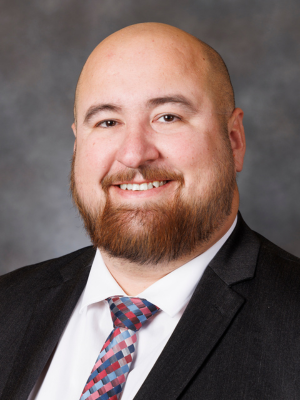
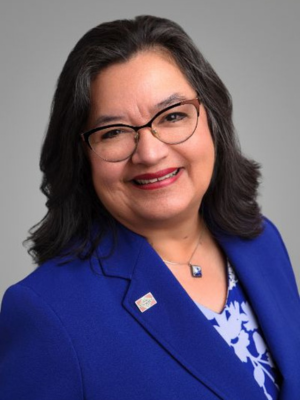
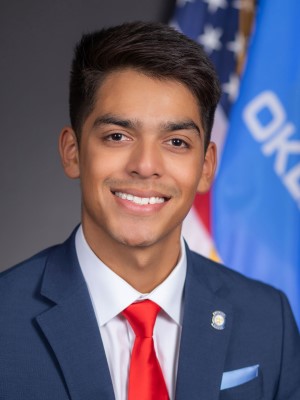
Sen. Dunixi Guereca (NE), Rep. Diana Gonzales Worthen (AR) and Rep. Arturo Alonso Sandoval (OK)
Reported to the Caucus by the
NHCSL Education Task Force
Sen. Teresa Ruiz (NJ), Chair

Unanimously ratified by the Caucus on November 22, 2025
WHEREAS, the Supreme Court has recognized the constitutionally protected right of every child in the United States, regardless of immigration status, to a free K-12 public education;[1] and,
WHEREAS, in Resolution 2017-18, Regarding the Impact of the Deferred Action for Childhood Arrivals Program on Educational Attainment and Community Stability, NHCSL highlighted the concern that “the removal of a child from school by the authorities with the intention of deporting said child is a traumatic event for the child and for all the children that associate with the child and the school community in general, that disrupts classes, distracts from school subjects, and can cause permanent psychological trauma and learning deficiencies in all school children impacted by the government’s action;” and,
WHEREAS, immigration enforcement activities by ICE, and other law enforcement agencies performing immigration enforcement, at or near schools or school transportation routes—including surveillance, questioning, detentions, arrests and data collection—deeply disrupt the educational environment for all students, and the mere threat of them discourages the attendance of undocumented children and of many citizen children of mixed status families,[2] an effect tantamount to denying them their constitutional right to education; and,
WHEREAS, on January 20, 2025, the Department of Homeland Security issued a memorandum rescinding its Protected Areas enforcement policy and thus allowing immigration enforcement actions in schools, college campuses, playgrounds, hospitals, places of worship and other social services facilities;[3] and,
WHEREAS, criminals immediately started taking advantage of U.S. Immigration and Customs Enforcement’s newly broader powers by impersonating ICE officers to kidnap and sexually assault young victims and harass others they perceive as foreign, especially Hispanics, regardless of their actual citizenship status;[4] and,
WHEREAS, students, families, and educators have reported increased trauma, anxiety, and confusion in response to the presence or threat of immigration enforcement near schools is exacerbating the already precarious problem of absenteeism,[5] an equity issue of great concern that NHCSL took on in Resolution 2019-11, Addressing Chronic Absenteeism in Schools; and,
WHEREAS, school personnel[6] often serve as the first line of support for immigrant and refugee students and must be equipped with the guidance, protocols, and legal protections necessary to uphold student privacy and ensure a safe, stable learning environment; and,
WHEREAS, both the National Education Association (NEA) and the American Federation of Teachers (AFT), have issued guidance to their membership on the toll that immigration enforcement actions take on students and their families wellbeing;[7] and,
WHEREAS, NEA and AFT strongly encourage educational institutions[8] to adopt a Safe Zones policy that outlines what school personnel and students should do if ICE or other law enforcement agency attempts to engage in immigration enforcement at schools.
THEREFORE, BE IT RESOLVED, that the National Hispanic Caucus of State Legislators urges all states to pass legislation to require educational institutions to adopt Safe Zone and Welcoming policies, if they have not already done so, that protect students' rights, ensure school personnel receive appropriate training, and prohibit any sharing of student information related to immigration status unless required by law and approved by legal counsel; and,
BE IT FURTHER RESOLVED, that NHCSL will advocate for the passage of the Protecting Sensitive Locations Act which would codify the sensitive locations into law prohibiting immigration enforcement actions in previously protected sensitive locations. Educational institutions should be places to learn, not grounds for deportation; and,
BE IT FURTHER RESOLVED, that NHCSL will advocate for state legislation that requires clear directives for educational institutions to adopt Safe Zone policies and protocols requirements, such as:
- Safe Zone policies should clearly distinguish between public and private areas within educational institutions and communities to restrict ICE or law enforcement to public spaces and safeguard the privacy rights of students, personnel, and community members in nonpublic areas;
- No third-party access, including by immigration or law enforcement, is allowed without site personnel approval. The governing body must deem such presence disruptive, and all requests must go to the designated contact for a legal review before any agent appears. Parents or guardians must be notified if students are involved;
- Provide clear guidelines for handling all requests from immigration or other law enforcement agents as follows:
- Request agent identification, contact info, and written purpose; retain copies. Record student names named in the request and reasons cited; and notify parents/guardians. Do not share personal info or conjecture about the student without legal counsel.
- Require a judicial warrant and/or court order and photocopy it:
- If a warrant is presented, before granting access, personnel must verify it is a valid court-issued arrest or search warrant—not an ICE or DHS administrative warrant; Provide agents the educational institution’s privacy policy and Board Resolution; Contact legal counsel or designated personnel; and inform agents these steps are required first;
- If a judicial warrant and/or court order is NOT presented, deny entry or information requested. Document the denial, note witnesses, request the reason for access, and contact legal or designated personnel;
- Campus police are not required to comply with voluntary detainer or notification or transfer requests from federal immigration authorities;
- Educational institutions should inform personnel, students, and parents or guardians, and train responsible parties, on the institution’s policies and protocols related to immigration enforcement;
- If ICE or law enforcement agents request student information, refer the request to the Superintendent’s Office or governing board to ensure compliance with Family Educational Rights and Privacy Act (FERPA), student constitutional privacy rights, judicial warrant standards, and other disclosure limits. This review must occur promptly and before any information is released;
- Prohibit educational institutions and personnel from disclosing or providing, in writing, verbally, or in any other manner, the education records of or any information about a student, student’s family and household, or personnel to an immigration authority without a valid judicial warrant or court order directing the educational institution or its personnel to do so; and,
- Any costs incurred by the educational institution for these potential state-mandated provisions shall be reimbursed to the educational institution by the state; and,
BE IT FURTHER RESOLVED, that NHCSL calls on states to pass legislation for educational institutions to review their record-keeping policies and practices and prohibit, to the extent possible, the collection of any data with respect to students’ or personnel’s immigration status or place of birth, if they have not already done so; and cease any such collection as it is irrelevant to the educational enterprise and potentially discriminatory; and,
BE IT FURTHER RESOLVED, that educational institutions are encouraged to create a response team/task force to create and update policy and protocol, and to address consequences of immigration enforcement for personnel or students, including referral to legal representation, impact on academic standing or employment, etc. Educational institutions should also coordinate with trusted community-based legal and immigrant rights organizations to establish Rapid Response Teams that support students and families affected by detention, deportation, or family separation; and,
BE IT FURTHER RESOLVED, that all relevant personnel be required to comply with these protocols and that the policies be communicated, posted, and translated into all languages spoken by the student body; and,
BE IT FINALLY RESOLVED, that NHCSL affirms its unwavering commitment to protecting immigrant youth, ensuring educational equity, and defending the legal and human rights of all students regardless of their immigration status.
IN ITS MEETING OF JULY 25, 2025, THE NHCSL EDUCATION TASK FORCE UNANIMOUSLY RECOMMENDED THIS RESOLUTION TO THE EXECUTIVE COMMITTEE FOR APPROVAL.
THE NHCSL EXECUTIVE COMMITTEE UNANIMOUSLY APPROVED THIS RESOLUTION ON AUGUST 5, 2025, AT ITS MEETING IN BOSTON, MA.
THE NATIONAL HISPANIC CAUCUS OF STATE LEGISLATORS UNANIMOUSLY AMENDED AND RATIFIED THIS RESOLUTION AT ITS ANNUAL MEETING OF NOVEMBER 22, 2025, IN OKLAHOMA CITY, OKLAHOMA.
[1] Plyler v. Doe, 457 U.S. 202 (1982).
[2] See for example, Padres indocumentados en Los Ángeles evitan llevar a sus hijos a la escuela por temor a ser arrestados (Univision, Jul 23, 2025).
[4] See, Fake ICE agents accused of evoking fear in LAUSD community (Fox 11 Los Angeles, Feb 6, 2025). And see, Artemis Moshtaghian, Gloria Pazmino and Nick Valencia, Multiple ICE impersonation arrests made during nationwide immigration crackdown (CNN, Feb 5, 2025)
[5] See for example, Lexi Lonas Cochran, Absent for ICE: Trump immigration enforcement hits school attendance (The Hill, June 19, 2025)
[6] In this resolution, “personnel” means educators, teachers, administrators, superintendents, faculty, staff, professors, governing board, campus official, district contractors, service vendors, after- school providers, and any other education individual of authority.
[7] National Education Association, Toolkit: Safe Zone School Districts (updated May 24, 2023). AFT, Standing United to Protect the Rights of Immigrant Students and Their Families: Toolkit.
[8] In this resolution, “educational institutions” means schools, school districts, colleges, universities, campuses, or any educational facility.