
2025-11
Hospital Price Transparency

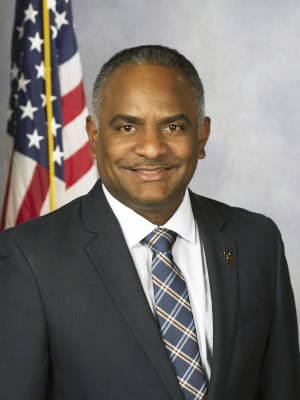
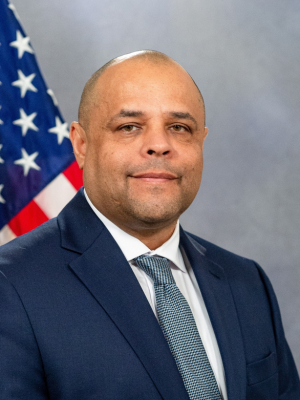




Sponsored by
Sen. Cristina Castro (IL), Rep. Danilo Burgos (PA), Rep. Jose Giral (PA),
Del. Joseline Peña Melnyk (MD), Rep. Louis Ruiz (KS), Rep. Hilda Santiago (CT) and Sen. Adam Gomez (MA)
Reported to the Caucus by the
NHCSL Healthcare Task Force
Rep. Alma Hernández (AZ), Chair

Unanimously ratified by the Caucus on November 22, 2025
WHEREAS, in Resolutions 2023-14 and 2024-03, this Caucus raised, among others, the concern that lack of competition through hospital consolidation is raising the cost of healthcare for patients; and,
WHEREAS, transparency in hospital pricing could help promote competition in certain markets but, as of November 2024,[1] only 21.1% of hospitals are fully compliant with the federal Price Transparency Rule[2] which requires hospitals to post all prices online:
- standard charges for all items, services, and drugs by all payers and all plans, the de-identified minimum and maximum negotiated rates, and all discounted cash prices, in the form of a single machine-readable file; and,
- prices for the 300 most common shoppable services either as a consumer-friendly standard charges display or as a price estimator tool; and,
WHEREAS, using that data from July 2023, a study found “significant price variations for the same care at the same hospitals and across hospitals in the same states. Within the same hospitals, prices vary by an average range of 10.7 times for the same procedures when comparing insurance plan negotiated rates. Expanding the analysis across hospitals in the same states, prices vary by an average range of 31.3 times when comparing hospitals and insurance plan negotiated rates;”[3] and,
WHEREAS, compliance with the rule peaked at 36% in mid-2023 and remained essentially at that level through early 2024, but collapsed in November 2024, mostly “due to files not having prices clearly associated with payer and plan names and not following required formats;”[4] and,
WHEREAS, changed guidance from the Centers for Medicare and Medicaid Services (CMS) starting in 2024 weakened the rule by allowing hospitals to obfuscate their pricing by posting percentages and algorithms, and, starting this year, estimates and averages, instead of actual prices;[5] and,
WHEREAS, allowing hospitals to post only averages and estimates may not increase transparency at all in some situations because some states have regulatory agencies that set average rates for hospital services and make the data public;[6] and,
WHEREAS, a study found that “only 16.8% of hospitals reviewed (335/2,000) posted a sufficient number of negotiated charges to enable easy comparison of prices by consumers, employers, and technology developers [and only] 133 hospitals (6.7%) met both the compliance criteria and the pricing data sufficiency criteria;”[7] and,
WHEREAS, experts recommend,[8] among other things, that CMS:
- “implement a requirement for a single uniform, standard template (e.g. CSV ‘wide’) that would contain complete, accurate, precise dollar figures associated with each contracted payer and exact plan. Strict adherence to the uniformity of template and data will help deliver meaningful hospital price transparency, and enable third parties to develop comparison shopping tools, help hospitals fully comply with the regulations, and aid CMS enforcement;”
- return to the original rule which required showing all five standard charges, all negotiated rates, minimum and maximum, and the discounted cash price in dollars and cents, not percentages, formulas or algorithms;
- disallow the use of an “expected allowed amount” or “price estimator tools” which are clearly estimates and not an enforceable, binding amounts that patients can rely on;
- expand price transparency requirements to all providers – including ambulatory surgical centers, accountable care organizations, and all providers at all points of care – because outpatient care can typically be provided at a substantially lower cost at an outside facility.
WHEREAS, on February 25, 2025, President Trump issued Executive Order 14221 ordering HHS and CMS to change its guidance to require actual prices, disallowing estimates; requesting better standardization and comparability; and requesting better enforcement policies; and,
WHEREAS, other advocates[9] recommend that states help enforce the rules by:
- Codifying the federal price transparency rules in state law and providing explicit authority for state regulators to enforce the requirements;
- Providing meaningful penalties for noncompliant hospitals. For instance, if a hospital is noncompliant, prohibit it from conducting debt collection on patients until it’s compliant; and,
- Explicitly allowing for a private right of action by patients when they’re overcharged or charged a price that wasn’t previously published publicly in the hospital’s price disclosures.
THEREFORE, BE IT RESOLVED, that the National Hispanic Caucus of State Legislators (NHCSL) calls on states to enact legislation[10] codifying the federal price transparency rules in state law and providing explicit authority for state regulators to enforce the requirements; providing meaningful penalties for noncompliant hospitals; and, explicitly allowing for a private right of action by patients when they’re overcharged or charged a price that wasn’t previously published publicly in the hospital’s price disclosures; and,
BE IT FURTHER RESOLVED, that the National Hispanic Caucus of State Legislators (NHCSL) calls on HHS and CMS to update its rules and guidance as recommended above.
IN ITS MEETING OF JULY 29, 2025, THE NHCSL HEALTHCARE TASK FORCE UNANIMOUSLY RECOMMENDED THIS RESOLUTION TO THE EXECUTIVE COMMITTEE FOR APPROVAL.
THE NHCSL EXECUTIVE COMMITTEE UNANIMOUSLY APPROVED THIS RESOLUTION ON AUGUST 5, 2025, AT ITS MEETING IN BOSTON, MA.
THE NATIONAL HISPANIC CAUCUS OF STATE LEGISLATORS UNANIMOUSLY RATIFIED THIS RESOLUTION AT ITS ANNUAL MEETING OF NOVEMBER 22, 2025 IN OKLAHOMA CITY, OKLAHOMA.
[1] Patient Rights Advocate, 7th Semi-Annual Hospital Price Transparency Compliance Report (November 2024).
[2] Department of Health and Human Services. Medicare and Medicaid Programs: CY 2020 hospital outpatient PPS policy changes and payment rates and ambulatory surgical center payment system policy changes and payment rates. (Nov 27, 2019).
[3] Patient Rights Advocate, Price Variation Report, p. 1 (Dec 2023).
[4] Patient Rights Advocate, 7th Semi-Annual Hospital Price Transparency Compliance Report, p. 1 (Nov 2024).
[5] Ibid.
[6] See for example, Maryland Health Services and Cost Review Commission. Annual Update to Unit Rates and Global Budget Revenue. (“HSCRC updates hospital Global Budget Revenue (GBR) and unit rates for all payers. The annual update includes adjustments for inflation, population changes, quality, potentially avoidable utilization, and other considerations such as assessments, funding for high-cost drugs, and other Commission approved grants/programs.”). And see the interstate differences at, for example, Johns Hopkins, Billing and Insurance: Charges and Fees.
[7] Patient Rights Advocate, 7th Semi-Annual Hospital Price Transparency Compliance Report, p. 4 (Nov 2024).
[8] Ibid., at pp. 6-9.
[9] Power to the Patients.